
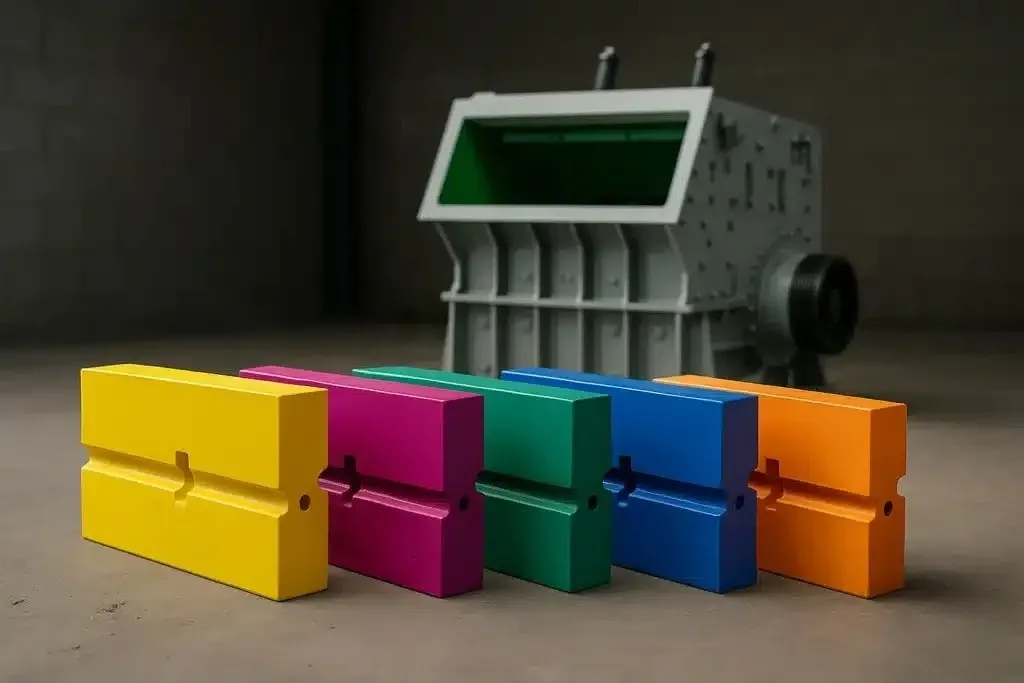
HSI Impact Crusher Parts
Blow Bars for HSI Crushers: Martensitic, Chrome and Ceramic Options
Aftermarket blow bars & curtain liners for HSI crushers. Martensitic, high-chrome & ceramic MMC. Fits Metso, Sandvik, Kleemann, Hazemag. Quote in 24h—ships globally.
What Blow Bars Do and Why Material Matters
Blow bars are the primary wear component in horizontal shaft impact (HSI) crushers — also referred to as breaker bars, impact hammers or rotor bars depending on the OEM. Mounted on the rotor, they strike incoming feed material at tip speeds of 25–40 m/s. The combination of impact energy and abrasion from the feed determines how quickly a blow bar wears — and which material will last longest in a given application.
Material selection is the single largest factor in blow bar wear life. Harder alloys resist abrasion but fracture more easily under impact. Tougher alloys absorb shock without breaking but wear faster against abrasive feeds. Aceros y Suministros manufactures blow bars in four base alloy systems — manganese steel, martensitic steel, standard high-chrome iron and tempered high-chrome iron — each available with ceramic or TiC insert upgrades for extended wear life in abrasive conditions.
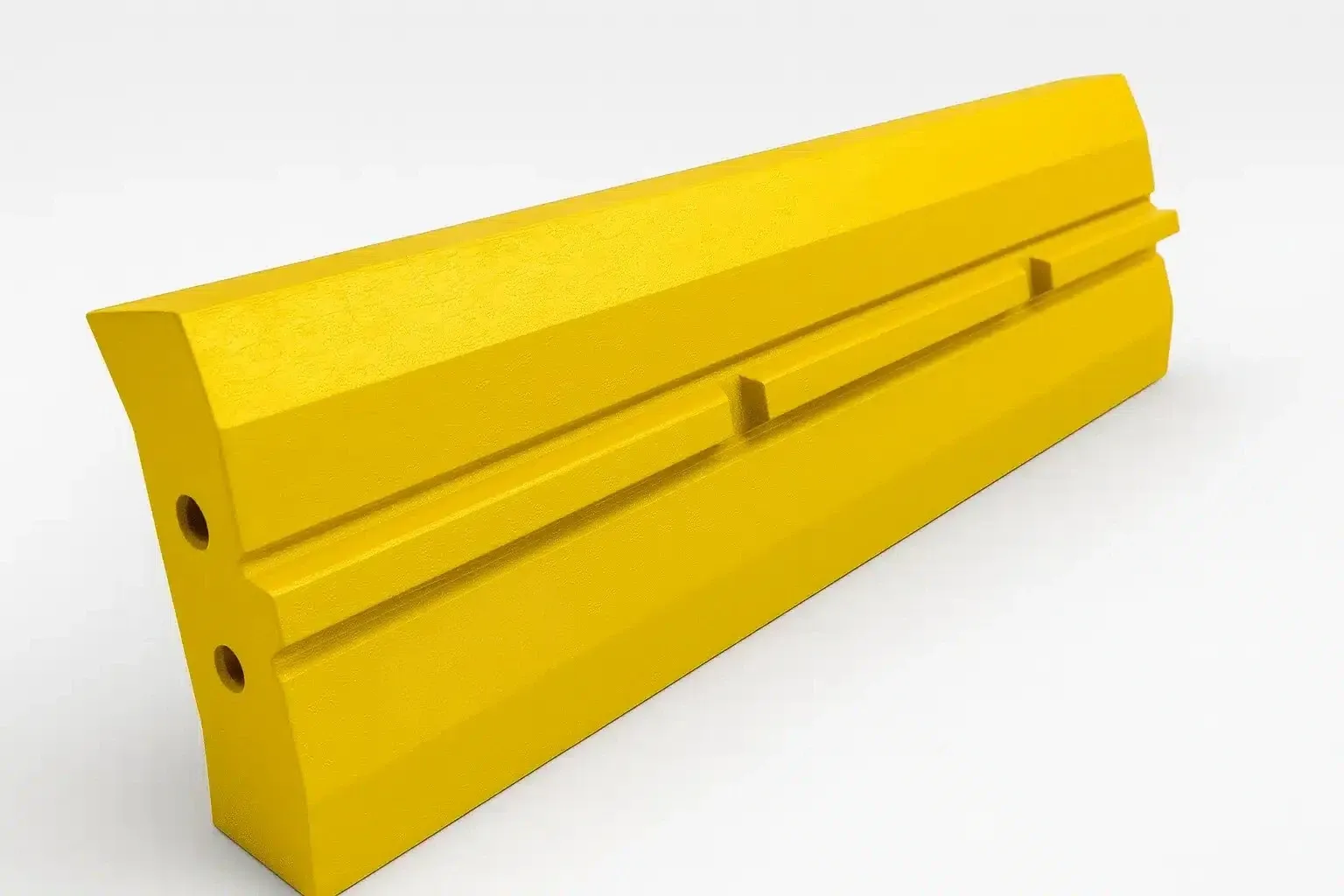
Blow Bar Strike Edge
Material hardness determines edge retention and wear rate
Material Selection by Application
Nine blow bar options covering every HSI application from primary demolition to ultra-clean manufactured sand production.
| Material | Hardness | Impact Tolerance | Application |
|---|---|---|---|
| Mn18Cr2 Manganese | 200–240 HB (work-hardens to 500+) | Very High | Primary crushing, heavy demolition, high tramp metal |
| Mn18Cr2 + TiC Composite | 200–240 HB base + 3200 HV TiC | Very High | Primary crushing where plain manganese wears too fast |
| Martensitic Steel | 48–54 HRC | Medium-High | Concrete recycling, mixed demolition, moderate rebar |
| Martensitic + Ceramic (MMC) | 48–54 HRC base + 1600 HV ceramic | Medium | Concrete and asphalt recycling with controlled feed |
| High Chrome | 60–64 HRC | Brittle | Clean abrasive secondary/tertiary, zero tramp metal |
| High Chrome + Ceramic (MMC) | 60–64 HRC + 1600 HV ceramic | Brittle | Ultra-clean secondary, manufactured sand |
| HC + Ceramic Plus (MMC) | 60–64 HRC + extended ceramic (60 mm depth) | Brittle | Ultra-abrasive, ultra-clean secondary with tight feed control |
| High Chrome Tempered | 55–58 HRC | Low-Medium | Variable quarry conditions with occasional impacts |
| HC Tempered + Ceramic (MMC) | 55–58 HRC + 1600 HV ceramic | Low-Medium | Abrasive feeds with some variability, limited tramp metal |
Manganese Steel (2 options)
Mn18Cr2 Manganese
- Hardness: 200–240 HB (work-hardens to 500+)
- Impact: Very High
- Application: Primary crushing, heavy demolition, high tramp metal
Mn18Cr2 + TiC Composite
- Hardness: 200–240 HB base + 3200 HV TiC
- Impact: Very High
- Application: Primary crushing where plain manganese wears too fast
Martensitic Steel (2 options)
Martensitic Steel
- Hardness: 48–54 HRC
- Impact: Medium-High
- Application: Concrete recycling, mixed demolition, moderate rebar
Martensitic + Ceramic (MMC)
- Hardness: 48–54 HRC base + 1600 HV ceramic
- Impact: Medium
- Application: Concrete and asphalt recycling with controlled feed
High Chrome Standard (3 options)
High Chrome
- Hardness: 60–64 HRC
- Impact: Brittle
- Application: Clean abrasive secondary/tertiary, zero tramp metal
High Chrome + Ceramic (MMC)
- Hardness: 60–64 HRC + 1600 HV ceramic
- Impact: Brittle
- Application: Ultra-clean secondary, manufactured sand
HC + Ceramic Plus (MMC)
- Hardness: 60–64 HRC + extended ceramic (60 mm depth)
- Impact: Brittle
- Application: Ultra-abrasive, ultra-clean secondary with tight feed control
High Chrome Tempered (2 options)
High Chrome Tempered
- Hardness: 55–58 HRC
- Impact: Low-Medium
- Application: Variable quarry conditions with occasional impacts
HC Tempered + Ceramic (MMC)
- Hardness: 55–58 HRC + 1600 HV ceramic
- Impact: Low-Medium
- Application: Abrasive feeds with some variability, limited tramp metal
Impact tolerance ratings are qualitative and reflect relative performance across these alloy systems. Actual Charpy impact energy depends on heat treatment, section thickness and test specimen geometry — contact Aceros y Suministros for test data specific to your application. Manganese steel work-hardens under impact: surface hardness increases from approximately 200 HB to 500+ HB during operation.
Hardness vs Impact Tolerance Trade-Off
Base alloy positions on the hardness-toughness spectrum. Composite upgrades (arrows) shift each alloy toward higher edge hardness without changing the base material's impact tolerance. Hardness shown in native units — HB for manganese (work-hardened), HRC for steels and irons.
Feed Preparation for Composite Blow Bars
MMC bars require functioning magnetic separation and metal detection upstream of the crusher. Ceramic and TiC inserts fracture under point-load impact from tramp iron, loader teeth or undetected rebar. Verify your feed preparation before specifying composite variants.
If upstream metal removal cannot be ensured, use the plain base alloy instead — Mn18Cr2 for primary duties, martensitic for recycling, or tempered high-chrome for variable quarry feeds.
How to Choose: Base Alloy First, Then Upgrade
Blow bar selection follows two steps. First, identify the correct base alloy for the application's impact-to-abrasion ratio. Second, decide whether a ceramic or TiC insert upgrade is justified by the feed conditions and required campaign length.
1 Step 1 — Base Alloy by Wear Mechanism
Mn18Cr2 Manganese
High impact, tramp metal present
Work-hardens under impact (200 → 500+ HB). Soft core absorbs shock without fracture.
Martensitic Steel (48–54 HRC)
Mixed impact and abrasion (recycling)
Hard as-delivered. Tolerates rebar without spalling.
High Chrome (60–64 HRC)
High abrasion, clean feed, low impact
Maximum hardness from dense chromium carbide structure. Brittle — requires zero tramp metal.
High Chrome Tempered (55–58 HRC)
Abrasive feed with occasional impacts
Heat treatment reduces brittleness at the cost of 10–15% wear life. Tolerates occasional shocks.
Not sure which base alloy fits your application?
Send your feed material description and crusher model — Aceros y Suministros recommends the right alloy within 24 hours.
2 Step 2 — Composite Upgrades
Ceramic inserts (1600 HV) and TiC rods (3200 HV) reinforce the strike edge against abrasion. They extend wear life but reduce overall impact tolerance because the inserts themselves are brittle. The cleaner and more consistent the feed, the more a composite upgrade is justified.
| Base Alloy | Upgrade Available | When to Upgrade | When Not To |
|---|---|---|---|
| Mn18Cr2 Manganese | + TiC (3200 HV rods) | Plain manganese wears too fast in abrasive primary duties | Low-abrasion feed — cost not justified |
| Martensitic Steel | + Ceramic (1600 HV inserts) | Concrete/asphalt recycling with controlled feed, low tramp metal | Significant rebar in feed |
| High Chrome | + Ceramic / + Ceramic Plus | Clean secondary duty where longer campaigns reduce changeout cost | Any tramp metal present |
| High Chrome Tempered | + Ceramic (1600 HV inserts) | Variable quarry feeds where abrasion still dominates | Frequent large uncrushables |
Available on standard high-chrome base, extends insert coverage to 60 mm depth for the longest wear life in ultra-abrasive applications such as manufactured sand production. It requires the tightest feed control of any option — steel contamination must be rigorously removed before the crusher.
Lead Times by Material Type
| Material | Typical Lead Time | Why |
|---|---|---|
| Mn18Cr2 Manganese (plain) | 2–3 weeks | High-volume production, commonly held in stock |
| Mn18Cr2 + TiC Composite | 4–6 weeks | TiC rod placement requires secondary casting process |
| Martensitic Steel (plain) | 2–4 weeks | Quench-and-temper cycle adds processing time |
| Martensitic + Ceramic (MMC) | 5–7 weeks | Ceramic insert placement during casting and post-cast inspection |
| High Chrome (plain or tempered) | 3–5 weeks | Controlled cooling and heat treatment cycle |
| High Chrome + Ceramic / Plus | 6–8 weeks | Extended ceramic placement, deeper insert coverage |
Lead times vary by bar dimensions, order quantity and current production schedule. If you are planning a scheduled shutdown, contact Aceros y Suministros early — particularly for ceramic and TiC composite variants. Plain manganese and martensitic bars in common sizes for Metso NP and Hazemag AP models are typically available from stock.
Planning a shutdown?
Check lead time and stock availability for your specific blow bar dimensions.
Manganese Steel Blow Bars (Mn18Cr2)
Mn18Cr2 manganese steel (ASTM A128 Grade C equivalent) is the standard material for primary HSI crushers processing variable or demolition feeds. Its defining property is work-hardening: the surface hardens from 200–240 HB to 500+ HB under repeated impact, while the unhardened core remains tough enough to absorb shock loads and tramp metal strikes without fracture.
Work-hardening requires sufficient impact energy to activate. In low-impact secondary applications — fine feeds, low rotor speed — the surface does not harden fully, a condition known as glazing. A glazed manganese bar wears rapidly because the soft surface has no abrasion resistance. If the application does not generate consistent high-energy impacts, martensitic or high-chrome alloys will outperform manganese.
Mn + TiC Composite
When plain manganese wears too quickly in abrasive primary duties, TiC (titanium carbide) rods embedded along the strike edge provide localised hardness of 3200 HV. The manganese base retains high impact tolerance compared with ceramic MMC options, while the TiC rods resist edge rounding in abrasive feeds. This composite is positioned between plain manganese and ceramic-reinforced options: it handles tramp metal that would fracture ceramic inserts, while lasting longer than plain manganese in abrasive conditions.
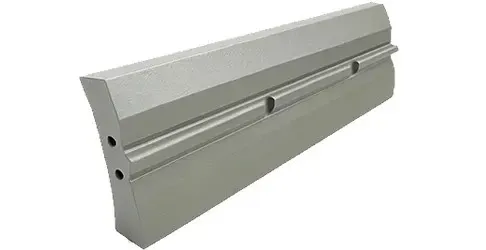
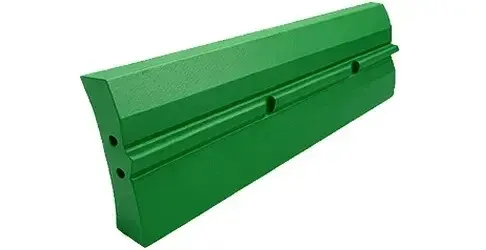
Mn18Cr2 + TiC Composite
Titanium carbide rods at 3200 HV
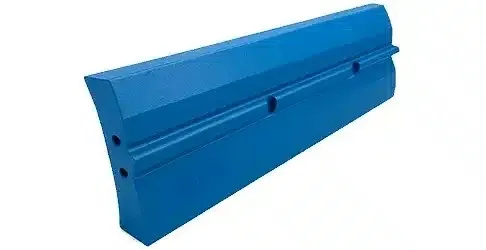
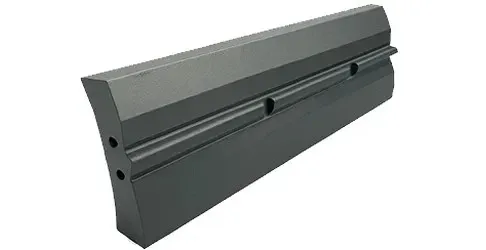
Martensitic + Ceramic (MMC)
1600 HV ceramic inserts for controlled feed
Martensitic Steel Blow Bars
Martensitic steel blow bars (48–54 HRC) provide the best balance of hardness and toughness for recycling and demolition applications. Unlike manganese, martensitic steel does not rely on work-hardening — it is already hard as delivered. This makes it effective in both high-impact and moderate-abrasion conditions without requiring the consistent heavy loading that manganese needs.
Concrete recycling is the primary application. Martensitic bars tolerate rebar strikes and embedded steel without the catastrophic fracture risk of high-chrome alloys. Impact tolerance is medium-high — sufficient for moderate tramp metal, though applications with very large or frequent uncrushables should consider manganese.
Martensitic + Ceramic (MMC)
For concrete and asphalt recycling with controlled feed and low tramp metal risk, ceramic inserts (1600 HV) placed during casting and secured in the martensitic matrix extend edge retention. Impact tolerance drops from medium-high to medium with ceramic inserts — suitable for controlled recycling operations but not for feeds with significant rebar or steel contamination. If tramp metal cannot be reliably removed before the crusher, use plain martensitic bars instead.
Blow Bar Gallery
Manganese, martensitic, and high-chrome blow bars manufactured to OEM specifications for all major HSI crusher brands.
-
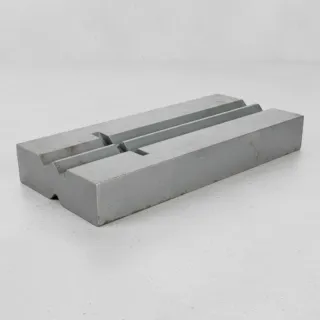
Mn18Cr2 Manganese Blow Bars
-
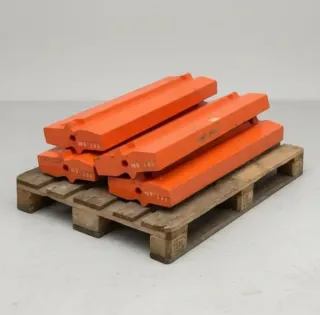
MMC Ceramic Insert Blow Bar
-
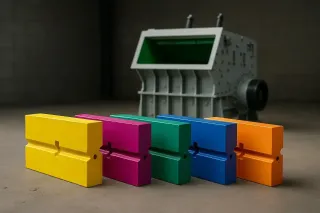
Martensitic HSI Blow Bars
-
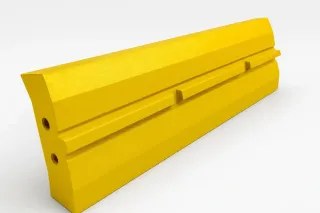
60-64 HRC High Chrome Blow Bar
-
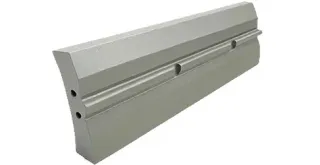
Primary Mn12 Blow Bar
-
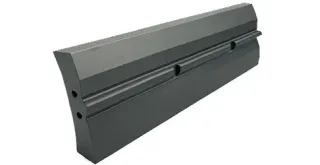
TiC Insert Mn18 + TiC Composite
-
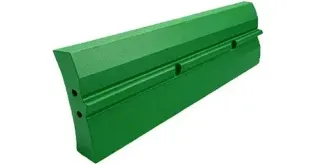
Recycling Martensitic Blow Bars
-
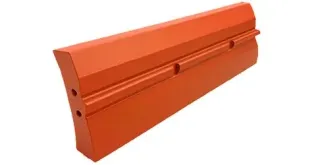
MMC HC + Ceramic Blow Bars
High-Chrome Iron Blow Bars
High-chrome white iron (ASTM A532 Class III Type A equivalent, 60–64 HRC) provides maximum hardness from a dense chromium carbide microstructure. It is the highest-performing material in clean, abrasive secondary and tertiary applications — limestone, basalt, clean gravel, manufactured sand. Impact tolerance is very low (brittle), making high-chrome unsuitable for any application where tramp metal or large uncrushable objects may enter the crusher.
Three ceramic-reinforced variants extend wear life at progressively higher levels. Standard ceramic (1600 HV inserts placed during casting) suits clean secondary stone and gravel. Ceramic Plus extends insert coverage to 60 mm depth for ultra-abrasive manufactured sand production with tight feed control. Both require rigorous steel removal upstream of the crusher.
High Chrome Tempered (55–58 HRC)
Where quarry conditions are variable — occasional impact events mixed with predominantly abrasive feeds — tempered high-chrome offers a controlled trade-off. Heat treatment reduces hardness from 60–64 to 55–58 HRC and increases impact tolerance from brittle to low-medium. This sacrifices approximately 10–15% wear life compared to standard high-chrome but prevents the premature fracture that standard chrome bars can suffer under unexpected shock loads. Available plain or with ceramic inserts for longer campaigns.
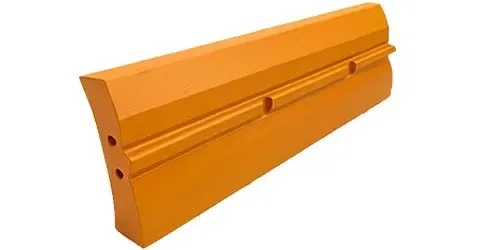
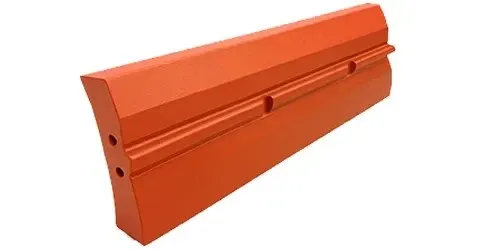
High Chrome + Ceramic (MMC)
For ultra-clean secondary and manufactured sand
Not Sure Which Material
Our application engineers provide free technical consultations. Tell us your crusher model, feed material, and current wear patterns — we'll recommend the optimal blow bar material for your operation.
Blow Bar Rotation and Wear Management
| Wear Stage | Action | Purpose |
|---|---|---|
| 25–30% worn | Rotate 180° (flip end-to-end) | Exposes unworn face, extends usable life |
| 50–60% worn | Move from leading to trailing position | Trailing position receives less impact |
| 70–80% worn | Replace | Below this, rotor balance is compromised |
Weight Balance Critical
Blow bars should always be weighed before installation and arranged on the rotor to minimise imbalance. A weight variance greater than 0.5 kg between opposing bars causes vibration that accelerates bearing wear.
- Weigh all bars before installation
- Assign positions to keep rotor within balance tolerance
- Ceramic and TiC bars are particularly sensitive to imbalance
- Insert fracture can occur under asymmetric loading
Compatible Crusher Models
Aceros y Suministros blow bars are manufactured to the dimensional tolerances of the following HSI crusher lines. Send your crusher model and rotor drawing for dimensional confirmation before ordering.
| OEM | Models |
|---|---|
| Metso | NP-LT 1007 NP-LT 1110 NP13 NP15 NP1520 NP1620 |
| Hazemag | APK30 APK40 APK50 APK60 APK105 APK1006 APK1013 AP-PM 1822 AP-PM 2225 HAZ790 HAZ853 HPI2025 |
| Sandvik | CI124 CI224 QI340 QI341 QI353 QI441 |
| Kleemann | MR100Z MR110Z MR122Z MR130Z MR150Z SHB10 SHB12 SHB13 SHB14 |
| Terex Finlay | I-100 I-110 I-120 I-130 I-140 IC110 |
| Terex Cedarapids | 5048 HIS 5064 HIS |
| Terex Evoquip | Cobra 230 Cobra 260 Cobra 290 |
| McCloskey | I34 I44 I4C I54 |
| Rubblemaster | RM60 RM70 RM80 RM90 RM100 RM120 |
| Keestrack | R3 R5 R6 KP R6 KT Destroyer 1112 Destroyer 1113 |
| KPI-JCI (ASTEC) | FT4240 FT4250 FT5260 |
| SBM | 1311 1313 REMAX 200 REMAX 300 REMAX 400 |
| Rockster | R700 R900 |
| Hartl | 1060 1270 1310 |
| Eagle | 500 1000 1200 1400 1600 |
| Lippmann | 4248 5165 |
| Striker | 907 1112 1312 1315 |
Contact Aceros y Suministros with the part number or rotor dimensions. Most HSI blow bars can be manufactured to drawing within 4–6 weeks.
Blow Bar Dimensions and Specifications
Five parameters must match the rotor slot exactly: length, width, height, weight and mounting hole pattern. Aceros y Suministros requires at least one of the following to confirm dimensional fit:
-
OEM Part Number
e.g. Metso N11921454
-
Crusher Model & Rotor Serial
For cross-reference to OEM specs
-
Dimensional Drawing
With tolerances specified
-
Physical Measurement
Length × width × height, hole centres
Blow bar weight affects both rotor balance and crushing energy. Heavier bars deliver more impact force per revolution but require the rotor to be designed for that mass. Aceros y Suministros matches bar weight to the OEM specification unless the customer requests a modification for a specific application.
Quick Quote Requirements
- Crusher brand and model
- Part number or dimensions
- Feed material type
- Current material / wear issues
- Quantity required
Not sure about specifications? Send photos of your worn bars and crusher nameplate — our engineers can identify the correct parts.
Get a QuoteReady to order?
Send your OEM part number or rotor drawing for dimensional confirmation and pricing.
Blow Bar FAQs
Find answers to common questions about blow bar materials, selection, maintenance, and ordering. Can't find what you're looking for?
Contact Our TeamWhich blow bar material lasts longest?
Can high-chrome blow bars be used in recycling applications?
When does manganese steel glaze, and what causes it?
Do ceramic blow bars break easily?
How often should blow bars be rotated?
What information does Aceros y Suministros need to quote blow bars?
Ready to Order Blow Bars?
Stock available for popular models. Custom orders manufactured in 4–6 weeks. Factory-direct pricing with technical support from experienced engineers.
24h
Quote Response
4–6
Weeks Production
50+
Countries Served
Request a Free Quote Today
Our engineering team responds within 24 hours with detailed specifications, material recommendations, and competitive pricing.